ISO 24882 BRIDGE PACK
Connected agricultural machines need engineered cybersecurity — not another checklist.
From tractor interfaces and embedded controllers to connected implements: use the emerging ISO 24882 approach to connect threat and risk assessment, technical security requirements, verification and lifecycle evidence. Reuse what is valid and make gaps visible.
The standard is still a final draft. We tell you what that means for you.
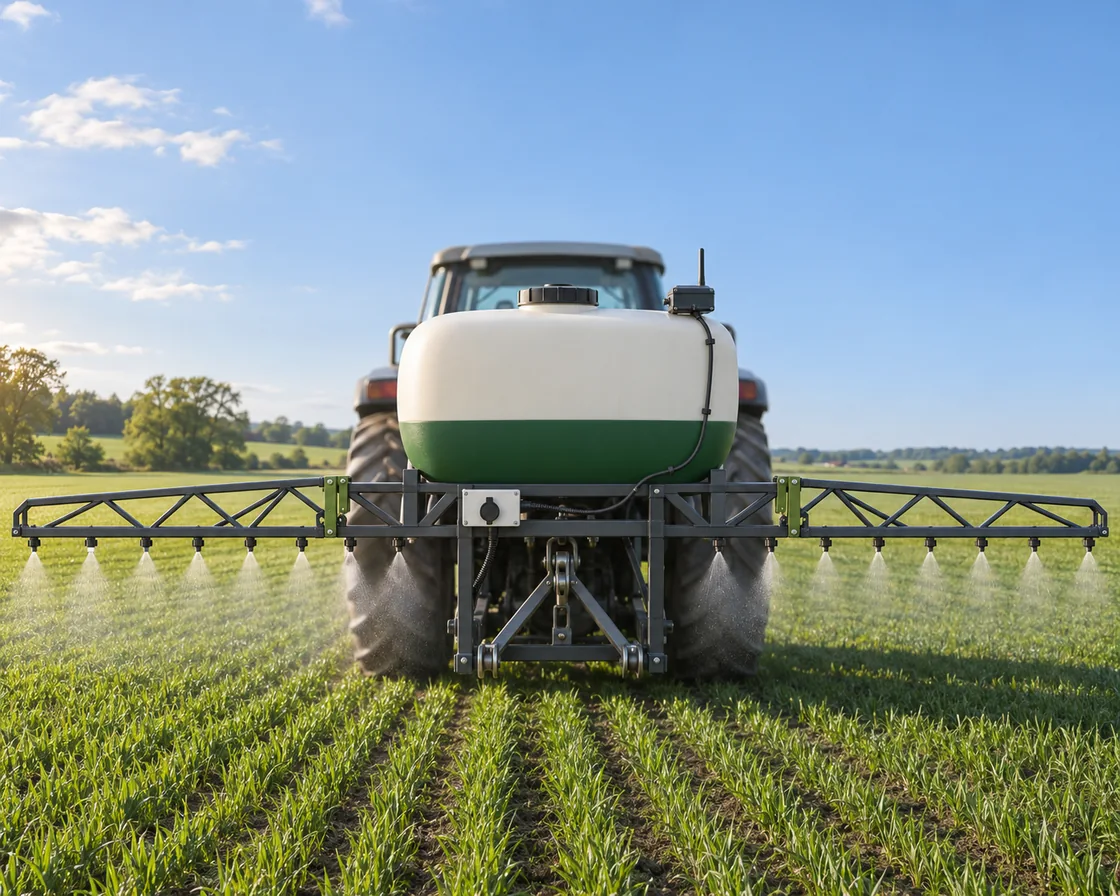 Host tractor: outside the boundaryIF-03 · IF-04LTE, BluetoothIF-02Internal CAN linkIF-05 · IF-06Service port, debugIF-01ISOBUS to the tractor
- Refers to ISO 24882 by number only and reproduces none of its text.
- Comes with a fictional worked example: the Brannvik SprayLine M24-H field sprayer.
- Written by a product cybersecurity architect. Not legal advice and no certification promise.
Which situation are you in?
I want to apply ISO 24882
How to use the draft and reuse your existing work.
02I build a tractor
Check tractor type approval. Assess machinery mounted on it separately.
03I build an implement or a self-propelled machine
Start with the machinery risk assessment and its control systems.
04I build part of a machine
Check what you supply and what the integrator needs to know.
05My machine has a radio, an app or a cloud service
Check whether the Cyber Resilience Act applies to what you sell.
Is my product a machine, part of a machine, or a tractor?
| What you sell | In law it is | What you do |
|---|---|---|
| Tractor | A vehicle type-approved under Regulation (EU) 167/2013, excluded from the Machinery Regulation (Art. 2(2)(i)) | Follow tractor type approval. Use ISO 24882 as good practice and check the CRA for its connected functions. |
| Implement the operator attaches (sprayer, mower, baler) | Machinery, often interchangeable equipment (Art. 3(2)) | Full machinery duties: risk assessment, Annex III 1.1.9 and 1.2.1, technical file, EU declaration of conformity, CE marking. |
| Self-propelled machine (combine, excavator, wheel loader) | Machinery | The same full machinery duties. |
| Machinery mounted on a tractor | Machinery: the tractor exclusion does not cover it | The same full machinery duties, for the mounted machine only. |
| A part that cannot work on its own and is built into a machine | Partly completed machinery (Art. 3(10)) | Your own duties under Art. 11. See “Selling part of a machine”. |
| Software or electronics that do a safety job and are sold on their own | Possibly a safety component (Art. 3(3)) | Check the definition and Annex II. If it is one, it carries machinery duties of its own. |
Five steps
Decide what you sell.
List the ways in: plugs, buses, radios, apps and cloud links.
Ask what someone could do and whether a person could get hurt.
Close the doors that matter. Protect software, settings and records.
Prove it with tests, technical documentation and instructions.
Inside the example files
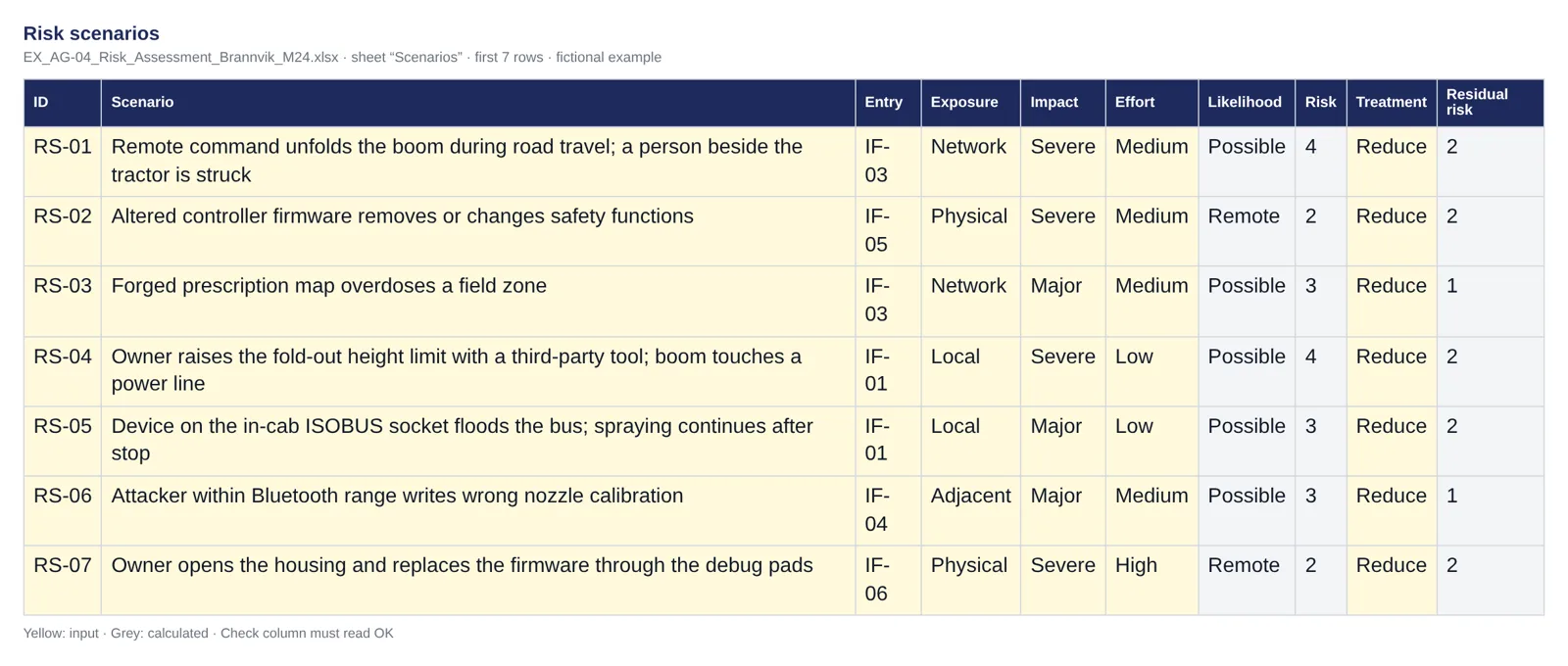
Seven excerpts from the completed example, one per module. Select a module to see the file.

Product cybersecurity architect
Written by a practitioner
Özer Koray Akdemir is a product cybersecurity architect. He built a product cybersecurity function for connected products while the regulation that required it was still new. The work covered threat analysis and risk assessment, cybersecurity requirements for suppliers, the architecture for signed over-the-air updates and their keys, and the evidence for the approval audit. Before that he worked for many years on embedded systems, cryptographic systems and secure communications. The Bridge Pack turns that experience into records your team can complete.
- Threat analysis and risk assessment for connected products
- Signed over-the-air updates, keys and PKI
- Evidence presented in approval audits
Start with what you have
Already have a Machinery Regulation file?
Start with the risk assessment, interfaces and test results you already have. Keep missing evidence visible. Seven modules, with editable records, guides and a fictional field sprayer example.